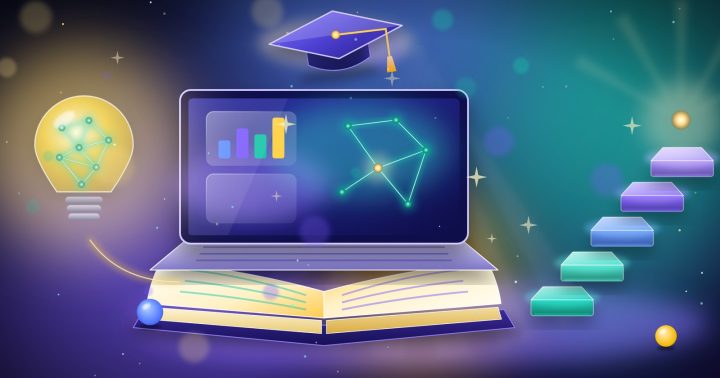
AI and the future of work is no longer a distant subject for conference stages and science fiction; it is a conversation happening at kitchen tables, in studios and in offices where the screen glows late into the evening. People ask the same quiet question in different words: will there still be a place for me?
This essay does not promise comfort, and it does not sell fear. It tries to describe honestly what is changing, who gains, who is at risk, and what a thoughtful person can do about it. The short answer is that the tool is powerful, and power always depends on the hand that holds it.

Table of Contents
AI and the Future of Work Begins With a Quiet Arrival
Nobody sent an invitation. One season the software simply learned to write a sentence, sketch an image, sort a mountain of records and answer a customer at midnight. What once needed a team of specialists began to appear as a box on a screen, patient and tireless.
Behind that box sits machine learning, the idea that a system can find patterns in enormous amounts of examples and then apply them to something new. It is not magic and it is not a mind. It is statistics at a scale that feels like intuition, and that is exactly why it unsettles us. It also explains why AI and the future of work now share every headline.
How AI Entered Nearly Every Field
It arrived with force. Doctors use it to read scans more carefully, farmers to anticipate weather and soil, lawyers to search through thousands of pages, teachers to prepare lessons, and musicians to test an arrangement before the band walks in. Almost every profession now has at least one corner where a machine is quietly at work, and that spread is the true starting point of AI and the future of work.
We see this daily in our own craft. Designers, writers, developers, editors and marketers all meet the same new colleague. Our own look at artificial intelligence in everyday life shows how far it reaches beyond the office, into the phone in your pocket and the route you drive home.
The Double-Edged Sword: Wisdom or Carelessness
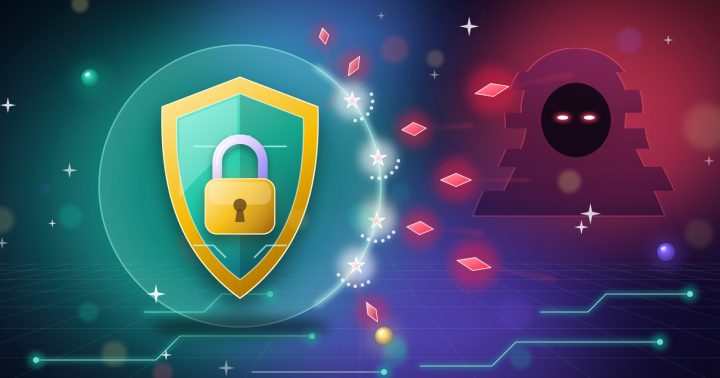
Here is the heart of the matter. Artificial intelligence is a double-edged sword. In the hands of a smart, curious and careful user, it gives enormous benefit. In the hands of the careless or the malicious, it wounds the user first and then society around them. The blade is the same; the outcome belongs to the person holding it.
The edge that builds
A small shop owner drafts a clear product description in minutes and spends the saved hours with customers. A student who struggles with a concept asks for ten different explanations until one finally clicks. A researcher sorts a pile of papers in an afternoon. A developer lets the machine write the dull parts and spends the day on the hard ones. Each of them still checks the result and remains responsible for it.
The edge that cuts
Now picture the other hand. A writer pastes an unchecked answer into a report and publishes an invented fact. An employee feeds confidential client files into a public tool. A fraudster clones a voice to deceive an elderly parent. A crowd of fake reviews and false images floods the public square, and trust, the quiet currency of every society, begins to drain away.
A sword does not choose its target. A tool this powerful rewards the careful and punishes the careless, and it rarely announces which one you are being.
Understanding both edges is the first requirement for any serious thought about AI and the future of work. Without it, we either worship the machine or fear it, and both attitudes leave us unprepared.
Every serious forecast about AI and the future of work carries a hidden assumption about the person using the tool. That is why this essay keeps returning to the user, not the machine. The same system that frees one worker from drudgery can tempt another into shortcuts that quietly erode their own skill and their employer’s trust.
What AI and the Future of Work Mean for Jobs
History offers a useful memory. The loom, the printing press, the typewriter and the spreadsheet each erased some tasks, created others and changed what it meant to be good at a job. The pain of such transitions was real, and it fell unevenly. We should not pretend this time will be gentler by default, because AI and the future of work will reward preparation, not hope.
What looks most exposed today are tasks, more than whole professions: repetitive drafting, routine data entry, first-pass summaries, standard translations, template layouts. A job is a bundle of tasks, and when some of them dissolve, the bundle reshapes itself. The person who adapts the bundle keeps the work; the person who defends the old shape often does not.
Where work is likely to grow
Roles that blend judgment, taste, trust and human contact tend to gain value. Think of the strategist who knows a client’s real problem, the designer with a distinct eye, the teacher who notices a discouraged face, and the specialist who can verify what a machine produced. Machines multiply output. Someone still has to decide what is worth making.
That is the practical meaning of AI and the future of work for most of us: not a sudden empty office, but a steady change in what we are paid to do. The wise reader watches that change early, asks which of their tasks are becoming cheap, and moves toward the ones that are becoming precious.
Skills That Last When Machines Learn
If the tasks keep shifting, the durable asset is the person. A few abilities appear again and again among those who thrive, and none of them is a secret. These are the real assets in AI and the future of work.
- Curiosity: the habit of trying a new tool before judging it.
- Judgment: the ability to tell a convincing answer from a correct one.
- Taste: knowing what is good, and why, long before a machine can say so.
- Communication: explaining, persuading and listening, which still move people.
- Ethics: a clear sense of what you will never do, however easy it becomes.
Notice what is missing from that list: memorizing facts a machine retrieves in a second. Learning is turning toward understanding, and understanding stays human work.
Learning itself becomes a daily habit rather than a season of life. In a world shaped by AI and the future of work, the question is less “what degree do you hold” and more “what can you learn this month, and can you show it?” Short courses, side projects and honest practice with new tools all count as proof.
Dignity in AI and the Future of Work
Work is more than income. It is where many of us find structure, friendship and the plain pleasure of making something well. Any honest discussion of AI and the future of work must keep that dignity at the center, because a society that treats people as interchangeable costs will eventually pay a far higher price.
Employers carry a real responsibility here. Training people instead of discarding them, being open about how tools are used, and sharing the gains of higher productivity are not acts of charity. They are the foundations of loyal, capable teams. Workers, in turn, carry theirs: to learn, to ask questions and to speak up early.
There is also a quieter risk: the loneliness of working beside a screen that never tires. Teams that protect time for conversation, mentoring and shared craft will discover that AI and the future of work need not mean a colder workplace. Used well, it can give people back the hours for exactly those human things.
A Practical Plan for the Age of AI
Reflection matters, but action matters more, and AI and the future of work rewards those who begin today. Whatever your field, a modest routine will serve you better than panic or denial.
- List the tasks in your week and mark which are repetitive and which need judgment.
- Test one tool on one repetitive task, and compare its result with your own.
- Always verify facts, figures, names and sources before anything leaves your desk.
- Protect private and client data; never paste what you would not publish.
- Spend the saved time on the work only a human can do well.
Businesses can follow the same path. Begin your own AI and the future of work plan with a small, low-risk process, write simple rules for staff, and keep a person accountable for every result. If you want help turning this into a plan for your brand, our services cover design, web, marketing, video and training, all under a formal contract with a fixed timeline.
It also helps to see how others apply the tools in practice. Our reflections on AI in marketing show how a team can gain speed without losing its voice, and the same discipline applies to nearly every job.
Freelancers and small studios deserve a special word. They often feel the shift first, because a single client can change the market overnight. For them, AI and the future of work is a reason to specialize, to build a recognizable style, and to sell judgment and reliability instead of raw hours.
Final Thoughts: Using AI and the Future of Work Wisely
The future of work will not be handed to us finished. It will be assembled, one decision at a time, by employers, workers, teachers and builders who choose how to use a very sharp instrument. Use it with curiosity, check it with discipline, and never let it replace your conscience. That is the whole lesson of AI and the future of work.
We started as individuals, and we have learned that people grow by adapting together. So treat AI and the future of work as a craft to be learned, not a verdict to be feared. Pick up the tool wisely, keep your hands steady, and stay deeply human while you do.