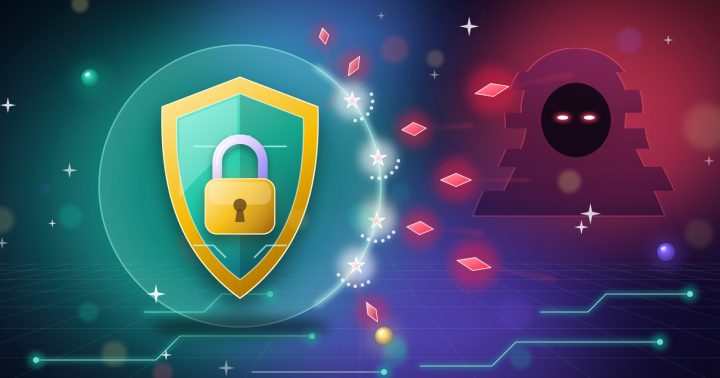
AI and privacy have become one story, told in two voices: the voice of a tool that wants to help us, and the voice of a hungry system that wants to know us. Every helpful suggestion, every uncanny recommendation, every perfectly timed reminder is built on something we gave away, often without noticing.
This essay is about that quiet exchange. It is not a warning meant to frighten you away from technology, and it is not a sales pitch for it either. It is a map, drawn so that you can walk through the new landscape with your eyes open and your hands on your own belongings.
Table of Contents
How AI entered the world with force
A few years ago, artificial intelligence lived mostly in laboratories and in the imagination of novelists. Today it sits, with its appetite for personal data, inside our phones, our inboxes, our cars and our search bars. It has entered the world with force, and it now touches almost every field: medicine, education, law, farming, design, banking, entertainment, logistics, and the small shop on the corner that answers customers through a chat window.
Speed is part of the story, but appetite is the deeper part. Modern AI learns from examples, and examples are made of human life: our words, our faces, our voices, our clicks, our routes through the city. If you want to understand artificial intelligence in everyday life, follow the data, because the data is the food.
Why AI and privacy cannot be separated
Think of an AI system as an orchard keeper who grows stronger with every fruit he collects. The more he gathers, the better his harvest, and the more tempting it becomes to gather everything. That is why AI and privacy pull against each other by design: what makes the system sharper is often what makes us more exposed.
Privacy, in the plainest sense, is the right to decide who knows what about you and for what purpose. The idea of information privacy is older than any algorithm, yet algorithms now test it every hour of the day.
What AI systems quietly learn about us
Most people picture the loss of AI and privacy as a dramatic theft. In reality it is usually a slow accumulation of small, harmless-looking facts that become powerful when they are joined together.
The obvious traces
Your name, your photos, your messages, your purchases and your location history are the visible layer. You shared them knowingly, even if you never read the terms attached.
The inferred traces
Here is the subtler layer. From patterns alone, a system can guess your habits, your mood, your health worries, your income range or the time of night you cannot sleep. You never typed those facts, yet they exist in a profile somewhere. This is where AI and privacy become most delicate, because an inference can feel like a confession you never made.
The double-edged sword: AI and privacy at work
AI is a double-edged sword, and nowhere is the blade clearer than here. The smart user benefits enormously. The careless or malicious user harms himself and the society around him, and often both at once.
The edge that protects
The same technology that studies us can also guard us. Spam filters learn to hide fraudulent messages. Banks notice an unusual payment before you do. Photo tools blur faces in a crowd, and on-device features process your voice without sending it anywhere. A person who understands these settings gets convenience and safety together.
The edge that wounds
Now turn the blade. Someone pastes a confidential contract into a public chatbot to save an hour, and the contents leave their control. A scammer clones a relative’s voice from a short clip and phones a grandmother in tears. A stranger builds a fake profile from scraped photos. A company quietly profiles customers and then treats them unfairly. In each case the tool was powerful, and the use was careless or cruel.
A sharp knife feeds a family or wounds a hand. The knife never decides. The person holding it does.
7 habits for AI and privacy in daily life
You do not need to become a security engineer. A handful of steady habits will carry you far, and each one costs only a little attention.
- Read what a tool does with your inputs before you paste anything private into it.
- Never share passwords, identity numbers, medical details or client secrets with a chatbot.
- Switch off the permissions an app does not truly need, such as microphone, contacts and precise location.
- Use a separate email address for experiments and sign-ups.
- Choose strong, unique passwords and turn on two-step verification.
- Agree a private code word with family, so a cloned voice cannot trick you.
- Review your accounts every few months and delete what you no longer use.
None of these steps is glamorous, yet each strengthens AI and privacy in your own home. Together they turn you from an easy target into a difficult one, and that difference is often all that separates a close call from a disaster.
Questions worth asking before you click
Good protection often begins with a pause. Before you hand anything to a new tool, a short list of questions can save you a long list of regrets. Where does my input go? Is it stored, and for how long? Can it be used to train the system? Can I delete it later? A trustworthy service answers these plainly. A vague answer is itself an answer.
This habit matters because AI and privacy settings are rarely loud. They sit in menus, quietly defaulting to whatever favours the provider. The curious user opens the menu. The hurried user never does, and the default becomes a decision made on their behalf.
Protecting others, not only yourself
Privacy is rarely a solitary matter, and AI and privacy are no exception. When you upload a group photo, you decide something for every face in it. When you feed a customer list into a tool, you spend the trust of every name on that list.
Parents carry a special duty when it comes to AI and privacy. Children cannot yet judge what a photograph, a voice recording or a school detail may reveal years later, so the adults must judge for them. Ask before you post another person’s image, and teach the young to ask as well. Respect passed from one generation to the next is the oldest form of protection we have.
AI and privacy as a business promise
Every company that relies on AI and privacy together is also a guardian of other people’s information. The honest ones understand that clients forgive an occasional slow reply far more easily than a leaked secret. Clear policies, minimal data collection and plain language about what is stored are not burdens. They are the foundation of a lasting reputation.
For small teams this is manageable. Our guide to AI tools for small business shows how to adopt helpful tools without handing them the keys to the whole house. The same care applies to printed and digital materials, from a brochure that lists customer testimonials to a website form that gathers contact details. Collect only what you need, and protect what you keep.
At Media Five Stars, our team has more than twenty years of experience, and every project runs under a formal contract with a fixed timeline. Those contracts exist for the same reason good privacy habits do: people deserve clarity about what happens to their work and their information. If you want a partner who treats your data with respect, explore our services.
Where the rules and the culture are heading
Lawmakers in many countries are writing new rules about data and automated decisions, and the public conversation is growing more mature. That is good news, but laws move slowly and technology does not wait. Rules set the floor. Personal judgment builds everything above it.
Expect the debate around AI and privacy to widen from individual choices to shared standards: clearer labels, easier deletion, honest consent. Until those arrive everywhere, the careful person remains the best firewall that exists.
Businesses that prepare early will find the future easier. A team that already limits what it collects, explains what it stores and trains its staff in AI and privacy basics will not panic when a new regulation or a nervous customer arrives. Preparation is cheaper than apology, and trust, once earned, travels by word of mouth faster than any advertisement.
The same is true for individuals. Someone who has practised good habits for a year will barely notice a new rule, while someone who has ignored AI and privacy until a crisis will feel every change as an insult. Habit is the quiet strength that carries us through each wave of novelty.
Final thoughts: use AI wisely
AI has entered the world with force, and it will not leave. We cannot unplug an invention that already lives in our pockets, but we can decide how we live beside it. The smart user will read, ask, limit and verify, and will keep AI and privacy in the same sentence every time a new tool appears. The careless user will paste, click and hope, and will pay for the habit sooner or later.
The sword has two edges, and your hand decides which one meets the world. Guard your own data, guard the data of the people who trust you, and teach others to do the same. When you treat AI and privacy as a daily practice rather than a one-time setting, you keep the benefits of the machine and keep your own story in your own hands. Start with one habit from the list today.