Every generation of learners meets a new machine that promises to make the work lighter, and AI for students is the strongest promise yet. It answers questions at midnight, explains a theorem three different ways, and never sighs when you ask the same thing twice. It also writes a passable essay in the time it takes to sharpen a pencil.
That is the whole tension in one sentence. A tool that can teach can also replace the learning, and the difference lies almost entirely in the hands of the person holding it. This essay is about those hands: how a student can lean on the machine without letting it carry the mind.

Table of Contents
Why AI for students arrived so fast
Artificial intelligence has entered our world with force, and it now touches nearly every field. It drafts contracts, reads medical images, sorts music, translates languages and helps farmers read the sky. It would have been strange if the classroom, the place where a society prepares its next generation, had stayed untouched.
So the tools walked in through the back door. Students found them before most schools had written a single policy. Today AI for students means chat assistants, writing helpers, language partners, quiz generators and tutors that adapt to a learner’s pace. Nobody voted for this arrival. It simply happened, and now the question is how to live with it well.
The wider history of educational technology reminds us that every new instrument, from the printing press to the calculator, raised the same alarm and the same hope. The pattern repeats. What changes is the speed, and the speed is exactly why habits matter more than ever.
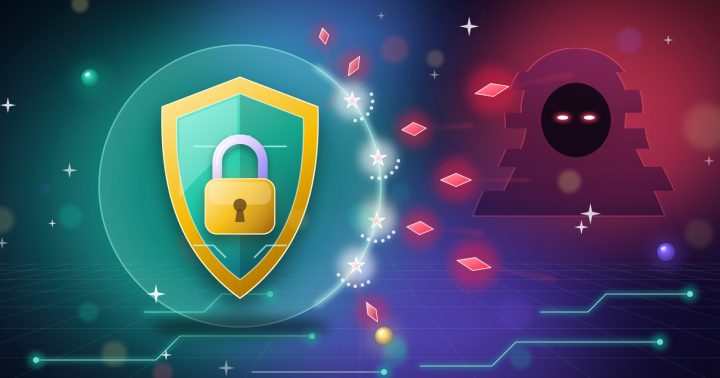
AI is a double-edged sword
Picture a sword with a blade on both sides. Held with skill, it clears a path. Held carelessly, it cuts the hand that grips it. Artificial intelligence is that kind of instrument, and nowhere is the image truer than in a student’s backpack.
A smart user gains a patient teacher. A careless user gains a ghostwriter, and loses the very skill the school year was meant to build.
The smart user benefits enormously: faster understanding, more practice, clearer feedback. The careless or malicious user harms themselves first, through shallow knowledge and fragile confidence. Then the harm spreads outward. Cheating erodes trust between classmates, unfair advantages poison grades, and a society full of graduates who never learned to think is a poorer society for everyone.
The bright edge: AI for students as a study companion
Begin with what is genuinely wonderful. A good study companion is patient, available and unembarrassed by your questions. AI for students can fill that role for a learner who has no private tutor, no quiet house and no older sibling to ask.
Explanations that meet you where you are
Stuck on photosynthesis? Ask for it as a story, then as a diagram described in words, then as a five-line summary for revision. A student who asks for a second and third explanation is doing real learning, because each version tests whether the idea has truly landed.
Practice without limits
The machine can quiz you on vocabulary, invent practice problems, play a patient conversation partner in a new language, and point out the exact step where your algebra went wrong. Used this way, AI for students multiplies the hours of honest practice, which is where skill is actually born.
A door for those who were left outside
In this sense AI for students can be a kind of fairness. Learners with dyslexia, with a second language, or with no access to private lessons can gain a great deal. A tool that rephrases, reads aloud and slows down widens the room for people the old system quietly pushed to the edges.
The dark edge: the shortcut that costs the mind
Now the other blade. The most tempting use of the machine is also the most corrosive: pasting the assignment in and pasting the answer out. The page is full, the deadline is met, and nothing has happened inside the student’s head.
Learning is effortful by nature. The struggle to organise an argument or solve a stubborn problem is not an obstacle to education, it is the education. Remove the struggle and you remove the muscle growth. A student who outsources every essay will one day face an exam room, an interview or a hard decision with no machine in reach and no practiced mind to rely on.
Confident nonsense
There is a second danger, quieter than cheating. These systems can state falsehoods in a calm, polished voice. They may invent a source, bend a date or blur a formula. A student who trusts without checking learns wrong things beautifully, and wrong knowledge is harder to unlearn than none at all.
Harm that spreads
Misuse is not only personal. Fabricated references, fake images and copied work damage honest classmates, burden teachers, and teach a generation that results matter more than integrity. Careless use of AI for students therefore harms the user and the community together.
Seven habits for using AI for students wisely
Wisdom here is not a ban. It is a set of small, repeatable habits that keep the human mind in the driver’s seat. Try these:
- Think first. Attempt the problem or draft the outline yourself before you ask for any help.
- Ask for explanations, not answers. Request hints, steps and reasons rather than a finished product.
- Verify every claim. Check facts, dates, quotations and sources against a trusted book or website.
- Write in your own voice. Use the tool to critique your draft, never to replace it.
- Teach it back. Explain the idea aloud in your own words. If you cannot, you have not learned it yet.
- Follow the rules. Learn your school’s policy and disclose assistance when it is required.
- Protect your privacy. Never share personal details, passwords or private records with a chatbot.
None of these habits is difficult. Together they turn AI for students from a crutch into a coach, and a coach is exactly what a growing mind needs.
An evening of AI for students done well
Imagine a student with a history essay due on Friday. She writes her own outline first, rough and imperfect. Then she asks the assistant to question her thesis and point out what is missing. It is a conversation, not a handover, and that is how AI for students works at its best.
Next she writes the draft herself, asks for feedback on clarity, and rejects half of the suggestions because they do not sound like her. Finally she checks every date against her textbook. The essay is slower to finish, yet she understands it completely, and the grade is only the smaller reward.
Now imagine the opposite evening, where the same tool produces the whole essay in a minute. The page looks identical on Friday. Inside the student, nothing has changed. That gap, invisible to everyone but the learner, is the real cost of careless AI for students.
What teachers, parents and schools can do
Students should not carry AI for students alone. Teachers can design assignments that reward process: drafts, oral explanations, handwritten work in class, reflections on how a tool was used. When the path is visible, the shortcut loses its charm.
Parents who want to guide AI for students can ask curious questions instead of fearful ones. What did you ask it today? Did it get anything wrong? Such conversations build judgment far better than a locked device. Schools, for their part, need clear and humane policies that explain what is allowed, what is not, and why.
Honest guidance matters because fear drives the habit underground. A student who is afraid to mention the tool cannot be taught to use it well.
The skills no machine can study for you
Some abilities will remain stubbornly human, and they are worth protecting. Curiosity, the itch to ask why. Judgment, the sense of which answer deserves trust. Patience, the willingness to sit with a hard page. Empathy, the art of understanding another person. Taste, the instinct for what is good.
A student who builds these will find that AI for students becomes an amplifier. A student who skips them will find that the amplifier has nothing to amplify. The machine can raise the ceiling, but only a trained mind can climb toward it.
This is also why structured learning still matters. A guided course, a mentor and a community of fellow learners give shape to effort in ways a chat window cannot. If you want a place to build real skills with real people, explore the Media Five Stars Academy.
The habits behind AI for students reach beyond school. The same discipline of questioning, checking and thinking first protects us in every digital space, from the news we read to the tools we trust at work. If you are curious how far this technology already reaches, our reflection on artificial intelligence in everyday life is a good companion read.
Likewise, those who will soon enter the workplace can see how the same judgment applies there in our piece on AI tools for small business. And since students increasingly build their own portfolios and pages online, a little care for the basics, like our website maintenance checklist, goes a long way.
Final thoughts on AI for students
Every sharp tool asks something of its owner. The machine will not ask whether you want to learn; it will simply do whatever you request. That is both its gift and its test. Use it to question more, practice more and understand more, and it becomes the finest companion a learner has ever had.
So choose the bright edge on purpose. Think first, check always, and keep your own voice. If you want to grow your skills with guidance and good company, begin your journey today, and treat AI for students as a lantern for your own mind rather than a substitute for it.